

Table of Contents
If you receive or are considering applying for the Disability Support Pension (DSP) in Australia, one of the most common questions is: how long does Disability Support Pension last?
The short answer is that DSP does not have a standard fixed duration such as two, five or ten years. If you continue to meet the relevant medical and non-medical eligibility requirements, your payment can continue over the long term.
However, DSP is not necessarily a payment that automatically continues for life. Services Australia can review your circumstances, including your medical eligibility, income, assets and other relevant circumstances. Your DSP may also change if your circumstances change.
This guide explains how long DSP can last, what can cause it to stop, what happens when you reach Age Pension age and what you should know about DSP reviews.
How long does Disability Support Pension last?
The Disability Support Pension can continue for as long as you remain eligible under Australia’s social security rules.
There is no general rule stating that DSP automatically expires after a particular number of years. Instead, Services Australia may review whether you continue to satisfy the medical and non-medical requirements for the payment.
For general medical eligibility, your condition generally needs to:
- Be expected to persist for more than two years
- Be diagnosed, reasonably treated and stabilised
- Result in an impairment rating of at least 20 points under the applicable Impairment Tables
- Prevent you from working or being retrained for work of at least 15 hours per week within the next two years, because of your impairment
- Meet any applicable Program of Support requirements.
You must also satisfy the relevant non-medical rules, including requirements relating to age, residence and income and assets.
Importantly, the requirement that your condition is expected to persist for more than two years relates to eligibility. It does not mean your DSP payment automatically ends after two years.
Does DSP continue for life?
DSP can continue for many years and, in some circumstances, for the remainder of a person’s working-age life, provided the person continues to qualify.
However, it is not accurate to say that everyone who receives DSP will automatically receive it for life.
Services Australia may conduct reviews to determine whether you still satisfy the relevant requirements. A review can consider whether your medical condition and its functional impact continue to meet the DSP rules.
Your payment can also be affected by changes to circumstances such as:
- Your income
- Your assets
- Your relationship status
- Your residence circumstances
- Your ability to work
- Changes in your medical condition
- Other circumstances that affect your eligibility.
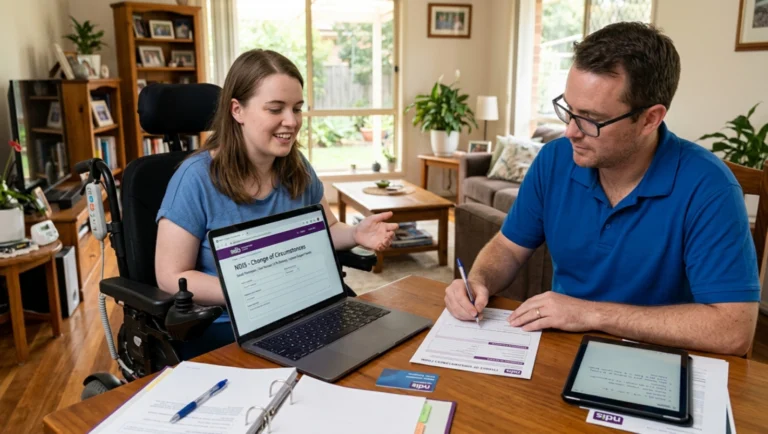
You are responsible for telling Services Australia when relevant circumstances change.
What happens during a DSP medical review?
If Services Australia selects you for a medical review, you will receive information explaining the review date and what you need to do.
The purpose of a medical review is generally to check whether Services Australia has current information about the impact of your disability or medical condition and whether you continue to meet the applicable medical rules.
You may need to provide updated medical evidence from your treating health professionals.
This evidence may need to explain:
- Your diagnosed conditions
- Current and planned treatment
- How your condition affects your everyday functioning
- Your symptoms and their frequency
- Whether your condition is improving, remaining stable or getting worse
- Your expected prognosis.
Services Australia states that insufficient medical evidence can affect a person’s payment, so keeping relevant medical information up to date is important.
Can DSP stop after a medical review?
Yes. If a review determines that you no longer satisfy the relevant DSP requirements, your payment may be stopped.
However, being contacted for a medical review does not automatically mean your DSP will be cancelled. The purpose of the review is to assess whether you continue to qualify.
Services Australia also conducts non-medical reviews, which can examine factors such as income, assets and residence.
What age does Disability Support Pension stop?
DSP is generally available to people who are below Age Pension age when they claim.
When you approach Age Pension age, the situation changes. Services Australia states that people receiving DSP who are nearing Age Pension age can choose to transfer to the Age Pension. Services Australia will contact eligible DSP recipients about the transfer and ask them to make a decision.
This means reaching Age Pension age does not simply mean that your financial support suddenly disappears.
Instead, you may be able to move from DSP to the Age Pension, subject to the applicable rules.
Is DSP automatically cancelled when you reach Age Pension age?
Not necessarily.
Services Australia specifically provides a process for DSP recipients who are approaching Age Pension age to transfer to the Age Pension. If you are approaching that age, pay attention to correspondence from Services Australia and follow the instructions provided.
Your individual circumstances can affect what happens, so it is important not to assume that your payment arrangements will automatically be identical to someone else’s.
Can you lose DSP if your medical condition improves?
Potentially, yes.
DSP eligibility is based partly on how your disability or medical condition affects your ability to function and work. If your circumstances change significantly, Services Australia may review whether you continue to satisfy the relevant medical requirements.
For example, if your capacity to work changes substantially, this may be relevant to your DSP eligibility.
That does not mean that every improvement in symptoms automatically results in your DSP being cancelled. The assessment depends on the applicable social security rules and evidence about your circumstances.
Can you work while receiving Disability Support Pension?
For people who also access NDIS-funded supports, it is important to understand that the NDIS operates separately from Centrelink payments. The NDIS Pricing Arrangements provide information about the pricing and funding rules that apply to NDIS supports and services.
There are rules that allow DSP recipients to undertake employment, but employment income can affect the amount of DSP you receive.
If you work, you need to report your employment income and comply with the relevant reporting requirements. Services Australia explains that income can reduce a payment, and a nil-rate period may apply in some circumstances.
This is important because some people assume that starting any job will automatically cancel their DSP. That is not necessarily the case.
Your individual income, circumstances and applicable Centrelink rules determine how employment affects your payment.
How long can DSP continue if your payment reaches $0?
There is also an important distinction between having a $0 payment temporarily and having your DSP cancelled.
Services Australia currently provides a nil-rate payment period for DSP. If employment income takes your payment to $0, you can generally have up to 12 consecutive fortnights of nil payment before Services Australia suspends or cancels the payment under the relevant rules.
If you become payable again within that period, your payments can automatically restart without requiring a new claim or waiting periods.
This can be particularly relevant for DSP recipients whose employment income fluctuates.
What can cause Disability Support Pension to stop?
The amount and type of government assistance you receive can also vary over time. For example, Cost of Living Payments may be introduced or provided under specific government measures, with eligibility and payment conditions applying separately from the ongoing DSP payment. These can include circumstances where you no longer meet the applicable eligibility or payability requirements.
Potential reasons include:
- You no longer meet the relevant medical requirements
- Your work capacity changes
- Your income or assets affect your eligibility or payment rate
- Your residence circumstances change
- You fail to meet certain reporting or participation obligations
- A review determines that you no longer qualify
- You reach Age Pension age and move to another payment arrangement.
Services Australia says it may review whether you continue to meet both medical and non-medical requirements and may stop DSP if you no longer meet those requirements.
Does DSP stop if you start working full-time?
Starting work does not necessarily mean your DSP immediately stops.
However, full-time employment may be inconsistent with the work-capacity requirements that applied to your DSP eligibility, depending on your circumstances.
If your employment circumstances change, you should report your income and other relevant changes to Services Australia. The effect on your DSP depends on your individual situation and the applicable income and eligibility rules.
It is therefore better to check how employment will affect your payment rather than assuming that working automatically ends DSP.
What happens to DSP when you reach Age Pension age?
For many DSP recipients, reaching Age Pension age is an important transition point. It is also worth understanding that Disability Pension Bonus Payments are separate from the standard DSP payment and may have specific eligibility and payment rules.
Services Australia says that if you receive DSP and are nearing Age Pension age, you can choose to transfer to the Age Pension. Services Australia will contact you about the process.
The Age Pension has its own eligibility rules, including income, assets and residence requirements. The fact that you previously qualified for DSP does not mean every Age Pension requirement is automatically satisfied.
If you are approaching Age Pension age, review your circumstances early and respond to any correspondence from Services Australia.
How often is Disability Support Pension reviewed?
There is no single review timetable that applies to every DSP recipient.
Services Australia may conduct medical reviews for different reasons, including checking whether it has current information about the impact of your condition and whether you still satisfy current medical rules.
Non-medical reviews can also occur.
These may consider:
- Income
- Assets
- Residence
- Relationship status
- Other circumstances affecting DSP.
Some income streams can also be reviewed each financial year because they can affect your payment and concession cards.
What should you do if your circumstances change?
If you receive DSP, it is important to keep Services Australia informed about changes that could affect your payment.
Depending on your circumstances, this can include changes to:
- Employment or employment income
- Relationship status
- Living arrangements
- Address or residence
- Financial circumstances
- Medical circumstances
- Other information relevant to your Centrelink payment.
Failing to report relevant changes can result in incorrect payments and potentially debts.
Key Takeaway: How Long Does Disability Support Pension Last?
So, how long does Disability Support Pension last?
There is no universal expiry date.
For an eligible recipient, DSP can continue for the long term while the person continues to meet the relevant eligibility and payment requirements. However, Services Australia can review medical and non-medical circumstances, and DSP may change or stop if those requirements are no longer met.
As you approach Age Pension age, you may also have the option to transfer from DSP to the Age Pension.
Because DSP rules can be complex and individual circumstances matter, anyone concerned about an upcoming review, change in employment, medical condition or transition to Age Pension should check their current circumstances with Services Australia or an appropriately qualified adviser.
Information current as at September 2026. Government payment rules can change, so always verify your circumstances against the latest Services Australia guidance before making financial decisions.