
Table of Contents
The NDIS pricing arrangements and price limits serve as your safeguard, setting clear boundaries around billing practices for registered providers.
With the updated 2025-26 pricing effective from 1 July 2025, knowing these rules helps you manage your plan with confidence and identify any inappropriate charges.
Here’s exactly what providers can and cannot charge under current NDIS pricing arrangements.
How NDIS Price Limits Apply
The current NDIS pricing arrangements and price limits 2025-26 establish maximum rates for disability supports, building upon the previous NDIS pricing arrangements and price limits 2024-25. These aren’t suggestions—they’re mandatory caps registered providers must follow when working with agency-managed and plan-managed participants.
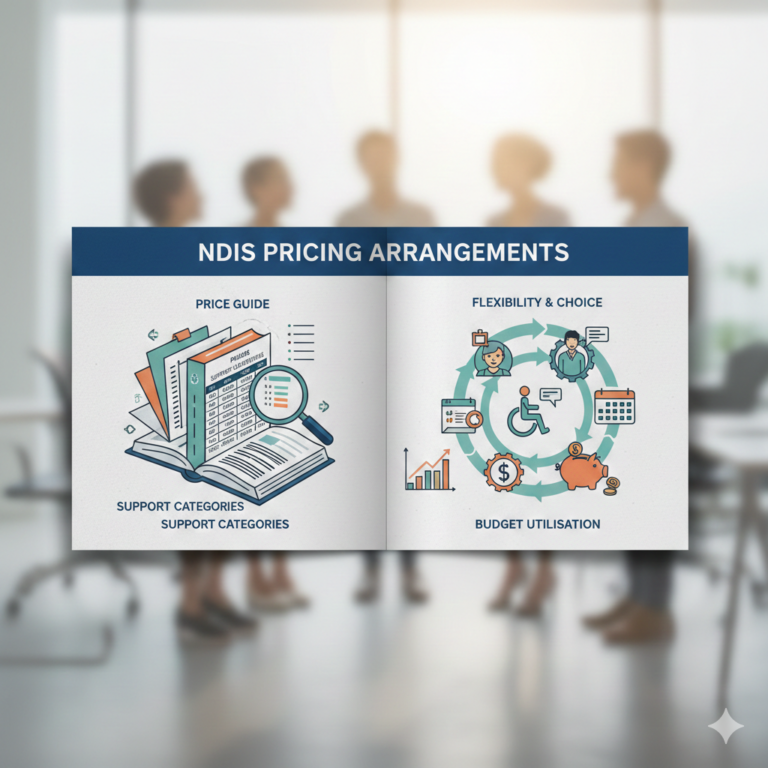
The NDIA doesn’t set actual prices; it sets maximum allowable charges. You can negotiate lower rates, but registered providers cannot exceed published limits for agency-managed or plan-managed participants. The NDIS price guides serve as the authoritative reference for these maximum rates across all support categories.
Why NDIS Pricing Arrangements Matter
They protect your funding from misuse
Price limits prevent overcharging, hidden fees, and unfair billing practices that drain your plan prematurely.
They promote transparency and accountability
Clear pricing rules ensure providers charge fairly, consistently, and in line with what the NDIS has approved.
They ensure equal access to supports
Fair pricing helps maintain a balanced system where all participants receive value, not just those who can challenge invoices.
They support the long-term sustainability of the NDIS
Preventing inappropriate claims protects the scheme for current and future participants.
They keep your goals front and centre
Your NDIS funding is limited. Every dollar spent on non-compliant charges is a dollar taken away from meaningful supports and quality of life.
What Providers CAN Charge
Service Delivery Fees
Service delivery fees are charges for the actual support you receive, such as personal care, therapy, community participation, or daily task assistance.
Providers must stay within maximum price limits set in the NDIS Support Catalogue. These rates aren’t “one size fits all”; they vary based on support type, time and day of support delivery, location, and support worker qualification level.
Since the NDIS Price Guide 2024, NDIS support worker pay rates have continued to rise in line with broader changes to disability support worker wages under national award updates. For example, Standard Assistance with Self-Care Activities increased from $67.56 to $70.23 per hour for weekday daytime support. For Sunday support, the same service rose from $122.59 to $127.43 per hour.
Travel Costs
Travel expenses require prior agreement in your service agreement and have two components:
Labour costs: Therapy providers can claim 50% of their hourly rate for travel time (effective 1 July 2025), up to location-based caps. Example: a physiotherapist charging $183.99/hour can claim up to $92.00/hour for travel. Disability support workers can still claim full hourly rates for travel.
Non-labour costs: All providers can claim tolls, parking, fuel, and vehicle costs. Travel time limits are 30 minutes in metropolitan/regional areas (MMM 1-3) and 60 minutes in remote areas (MMM 4-5).
Cancellation Fees
Short-notice cancellation fees apply when:
- Disability Support Worker services: Less than 7 calendar days’ notice
- Therapy services: Less than 2 clear business days’ notice
Providers can claim up to 100% of the agreed fee only when:
- The support item allows cancellation claims under NDIS pricing arrangements and price limits
- Your service agreement states that cancellation fees will apply
- The provider cannot find alternative billable work
- The fee doesn’t exceed price limits
Crucially, providers cannot charge if they successfully allocate the worker elsewhere during your cancelled time.
Other Allowable Charges
Non-Face-to-Face Support: Providers can bill for report writing, case conferences, service coordination calls, and session preparation when pre-authorised in service agreements and directly related to your support.
Group Services: Rates vary by participant-to-staff ratio (1:2, 1:3, 1:4), ensuring you pay appropriately for shared support costs.
Regional Loading: Remote areas receive 40% loading; very remote areas receive 50% loading above standard rates, reflecting genuine operational challenges.
What Providers CANNOT Charge
Above Price Limits
Registered providers absolutely cannot charge agency-managed or plan-managed participants above published price limits. If you notice charges exceeding NDIS support worker pay rates, report this violation immediately. Plan managers cannot process invoices exceeding price limits, regardless of provider registration status.
Gap Fees and Additional Charges
All registered providers are strictly prohibited from charging:
- Out-of-pocket gap payments
- Transaction fees (e.g., credit card or processing surcharges)
- Administrative levies (e.g., booking, service, or management fees)
- Late payment penalties
Such attempts must be reported to the NDIS Quality and Safeguards Commission.
Administrative Tasks
Providers cannot bill for general business administration as Non-Face-to-Face support, including:
- Processing payment claims
- Developing service agreements (unless pre-authorised and support-specific)
- Regulatory record-keeping
- Marketing
- Staff training
- Invoice preparation
Price limits already include overhead allowances for these costs.
Other Prohibited Charges
Providers cannot charge for:
- Unagreed services
- Travel beyond time caps
- Cancelled appointments where they found alternative work
- Unjustified price increases (charging NDIS participants more than non-NDIS clients without clear justification)
- Unilateral changes to service agreements without your approval
Quick Tips on Protecting Your NDIS Funding
Review service agreements carefully to ensure they comply with the 2025–26 price limits and clearly outline travel and cancellation terms.
Audit invoices regularly against the NDIS Support Catalogue to detect hidden fees or non-compliant charges.
Request itemised breakdowns when costs are unclear so you can confirm service dates, durations, and support item codes.
Keep detailed records of invoices and communications to strengthen your protection against incorrect billing.
Choose pricing-compliant providers who prioritise transparency and NDIS alignment, as expert pricing support is key to safeguarding your funding.
Get Expert Support with NDIS Funding
At Clear Care Community, we’re committed to transparent, compliant pricing respecting both the NDIS framework and your needs.
Our team stays updated with the NDIS Pricing Guide 2025. We ensure service agreements clearly outline charges, provide itemised invoices, operate within price limits, and never add gap fees or hidden charges.
Contact Clear Care Community today for quality disability support services with respect to your budget and aspirations.