Table of Contents
Social and Community Participation under the NDIS covers a wide range of funded activities from joining local sports clubs and attending art classes to volunteering, group outings, and skill-building programs, all designed to help people with disabilities connect, grow, and live more independently.
If you or a loved one holds an NDIS plan, you might be surprised by just how much falls within this support category. Many participants don’t fully use what they’re entitled to, because they’re unsure what counts.
This blog breaks it down clearly.
What Is Social and Community Participation Under NDIS?
At its core, NDIS social and community participation is about helping people with disabilities take part in everyday social, recreational, and community activities that others often take for granted.
This support is split across two budget areas in your NDIS plan:
Assistance with Social and Community Participation (Core Supports — Category 04)
This funds a support worker to help you access community activities right when needed. Think of it as practical, hands-on help to get out and engage with the world around you.
Increased Social and Community Participation (Capacity Building — Category 09)
This support is designed to gradually build your skills and confidence so you can navigate your community more independently and participate in activities with less ongoing assistance.
Both serve important purposes. Your Core budget covers immediate support needs, while your Capacity Building funding invests in your long-term independence.
Top Activities You Can Claim Under Social and Community Participation NDIS
Below are the main activity categories claimable under this support.
1. Sports and Physical Activities
Staying active is good for both body and mind. NDIS social and community participation funding can cover support for:
- Attending adapted sports programs or disability-inclusive fitness sessions
- Swimming lessons, dance classes, or martial arts with a support worker present
- Wheelchair sports or any adapted recreational sport
- Participating in fun runs, walking groups, or outdoor adventure programs
Note: Your support worker is there to assist you in accessing and participating safely. The NDIS covers their time, not your gym membership or equipment shared with all participants.
2. Arts, Music, and Creative Programs
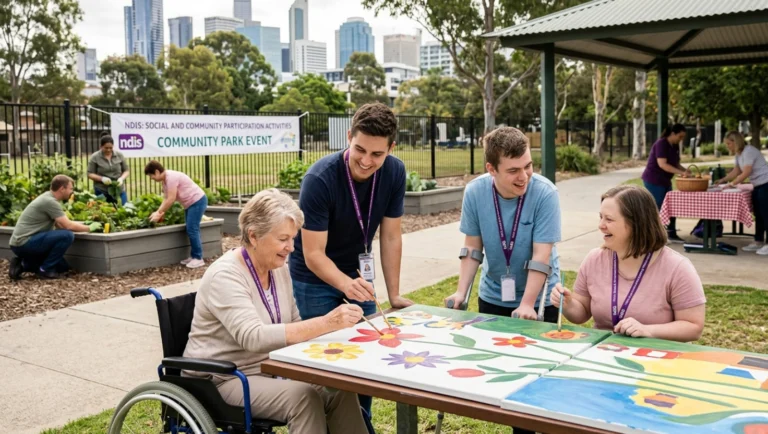
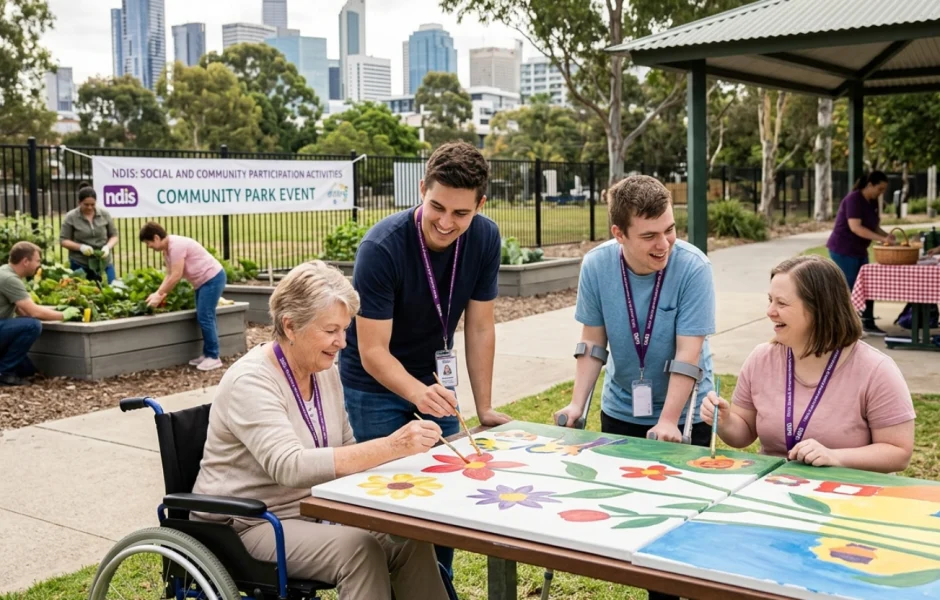
Creative pursuits are powerful ways to build confidence, express yourself, and connect with others. You can use your community participation NDIS funding to attend:
- Painting, pottery, or visual arts workshops
- Music lessons or group music programs
- Theatre, drama, or performing arts classes
- Photography clubs or community art exhibitions
Good news: In some cases, where the class is clearly linked to skill development goals in your plan, introductory training or program costs may be included as part of Capacity Building supports.
3. Volunteering and Civic Participation
It builds purpose, strengthens skills, and creates lasting connections. With assistance with social and community participation, a support worker can help you:
- Find and attend a volunteer role in your local community
- Take part in environmental programs like community gardening or clean-up days
- Participate in cultural events, local festivals, or civic activities
- Get involved in advocacy groups or community organisations
This kind of engagement often leads to genuine friendships and, for some, to employment opportunities.
4. Social Outings and Community Events
Sometimes participation simply means being part of everyday life. Your support worker can assist you in:
- Going to cafes, restaurants, or social gatherings
- Attending concerts, movies, sporting events, or cultural festivals
- Visiting libraries, museums, art galleries, or expos
- Trivia nights, board game cafes, or cooking classes
These might sound like small things, but for someone who has faced isolation due to disability, being able to get out and enjoy life alongside others can be genuinely life-changing.
5. Learning and Skill Development
The NDIS places strong value on building independence. Assistance with social and community participation can support:
- Attending workshops on cooking, budgeting, or digital literacy
- Joining book clubs or creative writing groups
- Participating in language classes or cultural programs
- Science, STEM, or educational group activities
When these activities have a clear skill-building purpose aligned with your NDIS plan, they can often be funded through your Capacity Building budget under the increased social and community participation.
6. Group and Centre-Based Activities
Group programs are a cost-effective and socially rewarding way to access support. When a support worker assists multiple participants at the same time, the hourly cost is shared among the group, helping your funding go further while also giving you the chance to make new friends.
These sessions can take place in community centres, activity hubs, or accessible venues
Common group activities include:
- Group fitness or exercise sessions
- Cooking and meal preparation programs
- Social skills development groups
- Educational workshops and learning sessions
Many providers deliver these activities as a Program of Support (POS). This is a structured arrangement of up to six months that provides both participants and providers with greater certainty around schedules and outcomes.
What Counts as ‘Reasonable and Necessary’?
Every support funded through social and community participation NDIS must meet the NDIS test of being ‘reasonable and necessary.’ This means the activity should:
- Be directly related to your disability
- Help you work toward goals outlined in your NDIS plan
- Represent value for money
- Not be something the government funds through another system (like Medicare or the education system)
Importantly, the NDIS will not fund general recreational costs that any individual would pay regardless of their disability, such as:
- Concert tickets
- Sporting gear
- Gym memberships
But the support worker who helps you get there and participate? That’s fundable.
How to Make the Most of Your Community Participation NDIS Funding
- Align activities to your plan goals: The clearer the connection between what you want to do and the goals in your NDIS plan, the easier it is to justify the funding.
- Cluster activities on the same day: This helps reduce the transport time and costs.
- Consider group programs: They’re social, skill-building, and more budget-friendly.
- Build routines: Regular, consistent activities become easier over time and demonstrate ongoing benefit to your plan review.
- Talk to your support coordinator: They can help match activities to your goals and identify providers who specialise in areas you enjoy.
Ready to Get Started with Social and Community Participation?
At Clear Care Community, we are a registered NDIS provider in narre warren dedicated to helping you make the most of your plans. Whether you’re looking to explore new activities, connect with your local community, or build skills for greater independence, our experienced team is here to match you with the right support worker for your needs.
Get in touch with us today. We’d love for you to be a part of your community.